
San Francisco’s modern art museum seems to have hit the jackpot with its new exhibition. On view until February are artworks from the personal collection of RM, leader of the K-pop phenomenon BTS, placed alongside works from SFMOMA’s own collection. Curated by RM with exhibition co-curators América Castillo and Hyoeun Kim of SFMOMA, the show brings together nearly 180 works by Korean and international artists, including artworks from RM’s collection that have never been publicly exhibited in the US, to offer an opportunity to discover modern and contemporary Korean artworks in conversation with other international artists, creating a dialogue that aims to span time, culture, and taste to forge personal connections with the viewer. While centred on modern and contemporary Korean art, RM’s collection encompasses the broader trajectory of art and taste in Korea, from the 6th century to the present, including ceramics, sculpture, and furniture.
This personal collection features artworks by numerous key figures from the modern and contemporary art scene in Korea, including Chang Ucchin, Kim Yun Shin, Kwon Okyon, Park Rehyun, To Sang-bong, and Yun Hyong-keun, in addition to works by other influential artists from around the world. To support this conversation, RM’s pieces are complemented by SFMOMA’s collection, including work by Donald Judd, Kim Whanki, Yves Klein, Agnes Martin, Henri Matisse, Georgia O’Keeffe, Nam June Paik, and Mark Rothko, among others.
This diversity allows works from both collections to be placed alongside each other, showing how artists from different backgrounds and times have explored the same universal topics relating to nature, memory, and human existence, showing how the artists produced works in their own distinct way. These similarities and differences are reflected back at the viewer, to ask how they react to the experiences in their own lives – and how they relate to the objects they see in front of them. To explore this avenue of thought, the exhibition shows artists working in different media, including those who chose to be defined by being aligned to an art movement and those known for their single, unique voice.
All the works ask the viewer to explore the perception of boundaries, as well as the concept of categories, definitions, and affiliations. It also asks what the relationships are that connect these works. No one view will be exactly the same. It does, however, offer the chance to explore part of one of the largest private collections of modern and contemporary Korean art and discover one person’s unique taste and view of art, what it means to them and how it is seen in the wider world.
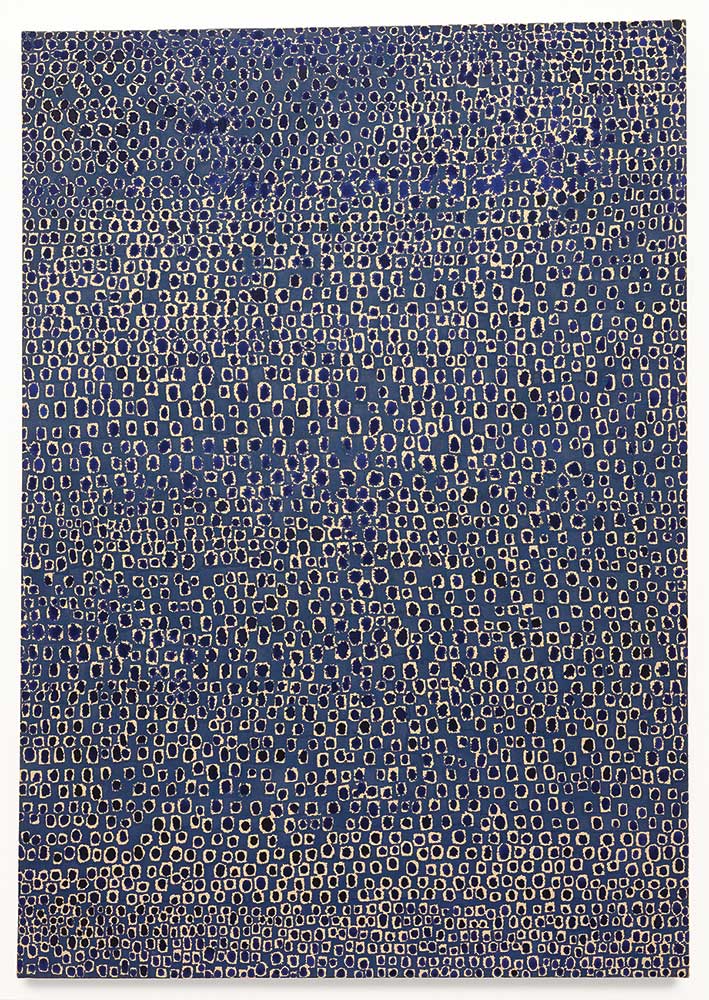
The exhibition offers a good introduction to the rich history of modern and contemporary Korean art. For example, Kim Whanki (1913-1974) and Yun Hyong-keun (1928-2007) are foundational figures in this story, and their works frame the journey of the exhibition. A pioneering figure in Korean abstract painting, Kim was born in Korea, but spent significant time among creative communities in Tokyo, Paris, and New York, which deeply informed his practice. He developed a visual language that bridged tradition and modernity, blending Korean ideals such as harmony, simplicity, and tranquillity with the patterns and colours of abstraction. There are three works by Kim, including 26-I-70 (1970), a work from his ‘all-over dot’ painting period named its completion date. Kim created this work while living in New York but feeling nostalgia for his home country. ‘I cannot seem to separate my art from Seoul,’ he once commented, and that melancholy can be seen in this work.
Yun Hyong-keun, who was both a student and later the son-in-law of Kim, is one of RM’s favourite Korean artists and a prominent part of the exhibition, with his own dedicated gallery featuring 16 works. Yun was a young adult during the Korean War, a period of political repression during which he faced multiple arrests and persecution. His works, known for their philosophical depth, materiality, and restrained palette, carry the weight of these experiences in their technique and solemnity.
Large paintings layering ultramarine and umber, such as Blue-Umber ‘79-C6, which appears in the exhibition’s last section, represent Yun’s concept of the gate of heaven and earth, where blue symbolises the colour of heaven and umber the colour of earth. He was also a leading figure of Korea’s 1970s Dansaekhwaart movement, which is characterised by monochromatic paintings. There are works by other artists from this period, too, including Chung Sang Hwa and Kim Tschang-yeul. Works by other key figures, such as Chang Ucchin (1917-1990), Kwon Okyon (1923-2011), and To Sangbong (1902-1977), are incorporated thematically as the exhibition moves from Kim’s expansive, outward-looking modernism to Yun’s inward, contemplative gravity.
RM explains his personal journey with art and his experience of co-curating the exhibition: ‘We live in an age defined by boundaries. This exhibition at SFMOMA reflects those boundaries: between East and West, Korea and America, the modern and the contemporary, the personal and the universal. I do not want to prescribe how these works should be seen; whether out of curiosity or study, all perspectives are welcome. My only hope is that this exhibition can be a small but sturdy bridge for many’.
Until 7 February 2027, San Francisco Museum of Modern Art, sfmoma.org


